
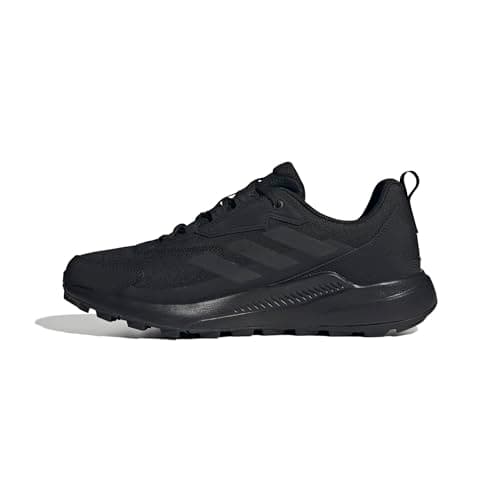

A few summers ago, I was leading a day hike out of a trailhead near the west side of Glacier when the sky just opened up. No warning, no gradual build, one minute dry trail, the next a steady cold rain soaking everything. I was wearing a pair of shoes I thought were "water-resistant enough," and I spent the last four miles back to the car with sloshing, numb feet. That kind of misery has a way of sharpening your gear priorities fast. So when I started testing the Adidas Terrex Anylander Rain.RDY, waterproof performance was the first thing I paid attention to.
We may earn from qualifying purchases.
Who should skip it
If you're planning to spend weeks at a time on long-distance trails carrying a heavy pack, I'd point you toward a stiffer, more supportive boot. The Anylander is a low-cut hiking shoe, and that design trades ankle support for agility. On technical scrambles where you need a locked-in feel, or on trails with a lot of loose talus, it'll feel a little undergunned. Backpackers carrying 40+ pounds should look elsewhere.
I'd also say this shoe isn't built for deep stream crossings. The Rain.RDY membrane does its job in rain and shallow puddles, but if you're regularly fording knee-deep creeks, like some routes in the backcountry of Olympic or North Cascades, water will eventually find its way in over the collar. That's not a knock specific to this shoe; it's just physics with any low-cut waterproof design.
And if you're in a hot, humid environment like the Florida parks or lower elevations of the Smokies in August, honestly, a non-waterproof mesh shoe might keep your feet more comfortable. Waterproof membranes limit breathability by nature. For cool-to-cold, wet conditions, though? This is where the Anylander earns its place.
First impressions
Out of the box, the Anylander feels lighter than I expected. At 390 grams for a US 9, it sits in that sweet spot where it doesn't feel like a trail runner but doesn't drag like a traditional hiking boot either. The black-on-black colorway with the grey sole is understated, no garish color blocking, which I appreciate.
The upper has a structured feel without being stiff. I didn't need a long break-in period; I wore them on a half-day hike the same week I received them and didn't come home with any hot spots. The toe box has decent room, which matters on downhills when your foot wants to slide forward.
One thing I noticed right away: the lacing system is straightforward but nothing special. No heel-lock lacing channels, no quick-pull system. You just lace them up the traditional way. It works fine, but if you've been spoiled by more refined lacing setups on other trail shoes, you'll notice the absence. That's my honest criticism of the build, for a shoe at this price point, a more considered lacing design would have been a meaningful upgrade. I had to re-tie once mid-hike on uneven ground, which I don't usually have to do.
Check sizing and current availability on Amazon here, the Black/Black/Grey colorway I tested is the one I'd recommend for versatility.
What works
The Rain.RDY membrane is the real reason to consider this shoe. I wore the Anylanders on a wet autumn morning in the Madison Range near Bozeman, the kind of damp where the trail is more mud than dirt and the grass is soaked through. My feet stayed dry for the full three hours. Not "mostly dry." Dry. The sealing is solid throughout, and I didn't notice any cold spots that would suggest gaps in coverage.
The Traxion outsole grips well. Wet rock, soft mud, packed dirt, I didn't slip on any of it. The lug pattern isn't as aggressive as a dedicated mud shoe, but for typical national park trail conditions (think maintained paths that turn wet), it handles grip confidently. I felt secure on a damp granite section near a creek crossing in a way that I don't always feel in trail runners with shallower tread.
The EVA midsole cushioning is comfortable for day hikes in the 8-12 mile range. It absorbs impact without feeling marshmallow-soft, which I prefer. After a full day, my feet weren't screaming. The 10mm heel-to-toe drop feels natural if you're used to traditional footwear, it's not as low as a zero-drop shoe, and for most hikers, that's a good thing.
The fact that these are made in part with recycled and renewable materials is worth a mention, too. Adidas has been improving on this front, and for a lot of the folks visiting national parks, that kind of sourcing decision matters. It doesn't change how the shoe performs, but it's a consideration.
If wet-weather hiking in the parks is your main use case, the Anylander is a practical, no-fuss choice. See it on Amazon to check current availability in your size.
| Pros | Cons |
|---|---|
| Rain.RDY membrane keeps feet genuinely dry in rain and mud | Basic lacing system, no heel-lock or quick-pull features |
| Lightweight at 390g for a waterproof shoe | Low-cut design offers limited ankle support for heavy packs |
| Traxion outsole grips well on wet rock and soft trail | Membrane limits breathability in warm, humid conditions |
| Comfortable EVA cushioning without feeling too soft | Not suited for deep water crossings |
| Partial recycled and renewable materials construction | Price not listed, worth checking before buying |
I've worn a lot of hiking shoes across a lot of conditions, and I don't recommend things I wouldn't actually put on my own feet on a wet trail. The Anylander isn't trying to be everything, it's a solid, honest waterproof day hiker that does what it promises. If that's what you need, it's worth a look., Jenna
FAQs