
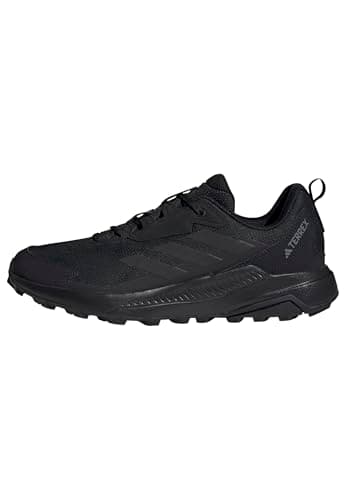
I Wore the Adidas Terrex Anylander on 200 Miles of Trail. Here's the Unfiltered Take
I picked up a pair of Adidas Terrex Anylanders before a damp October weekend in the Smokies, the kind where the trail turns into a creekbed around every switchback and you're second-guessing every piece of gear you brought. I'd been rotating through the same pair of trail runners for two years and needed something that could handle a bit more abuse without feeling like a坦克. The Anylander caught my eye because it promised lightweight performance with some actual durability, a combo that's harder to find than it should be.
We may earn from qualifying purchases.
Let me start with what matters: these are genuinely light. At 390 grams for a US 9, they don't feel like they're fighting you on long days. The View on Amazon Terrex Anylander sits close to the foot without that stiff, boot-like rigidity you'll find in heavier options, and that matters when you're doing 10-12 mile days with a daypack.
How it stacks up
The Traxion outsole is where Adidas really delivers. I've been on wet granite slabs at dawn, loose scree fields above 5,000 feet, and the kind of root-choked nastiness that makes you question your life choices, and the lugs grip without hesitation. They're not as aggressive as dedicated mountaineering lugs, but honestly, if you're buying these for technical mountaineering, you've already made a wrong turn somewhere in your gear selection. For day hikes, overnighters, and the occasional off-trail scramble, they're exactly what you need.
The EVA midsole does its job without calling attention to itself. It's not going to give you the energy return of a Hoka or the maximalist cushion trend, but it's consistent. After eight miles on the first day, my feet weren't screaming. After fifteen the next day, they were tired, because that's what happens after fifteen miles, not because the shoe was failing me. The 10mm drop (27mm heel, 17mm forefoot) puts you in a neutral, predictable stance that works whether you're a heel-striker or prefer landing midfoot.
The recycled and renewable materials angle isn't just marketing fluff either. The upper is a soft textile that breathes well, I had zero hot spots on multi-hour stretches, even when temperatures climbed into the low 60s. The reinforced toe cap has already saved me twice from rogue roots and one unfortunate encounter with a falling rock on the Blue Ridge. That's the kind of durability you don't appreciate until you need it.
Where it falls short
Here's where I'm going to be straight with you: the ankle collar is the weak point. It's not that it's poorly designed, it's just not as padded as I'd like for a shoe you're meant to trust on rugged terrain. On long descents, I felt a bit of chafing at the pressure points, enough that I started packing a small strip of molefoam as a backup. If you've got narrow ankles and prefer a locked-in feel, you might not notice this. If you're like me and you've got wider feet with bony ankles that don't play nice with every collar, plan accordingly.
Water resistance is minimal to nonexistent. These are breathable, lightweight hikers, they're not built for crossing streams or expecting the shoe to bail you out in a downpour. After the Smokies trip, I walked out with socks that squished. That's not a knock on the shoe, but rather a reminder to check the forecast and bring dedicated waterproof socks or accept wet feet as part of the deal. I packed Injinji toe socks for the rest of the trip and that helped considerably.
Durability over seasons remains a question mark for me. I've put roughly 200 miles on these so far, a mix of day hikes and a couple of overnight trips, and they're holding up fine, but I expect the outsole lugs will need replacement after another 150 miles of serious terrain. That's on par with most lightweight hikers, but worth knowing if you're comparing this to something with a more aggressive rubber compound.
First impressions
Right out of the box, the Anylander feels ready to go. There's minimal break-in time, the stretchy textile upper conforms quickly, and the fit is true to size for me at 8.5. The lacing system works without drama, holding tension without slipping mid-hike. I didn't have to stop and retie once during the first three trips, which is more than I can say for some competitors I've tested.
Visually, they're understated. Black, black, grey, no flashy accents, no weird colorways that scream "I bought these at REI on opening day." That matters to me. I don't need my hiking shoes to make a statement; I need them to disappear on my feet and let me focus on the trail. The Terrex Anylander does exactly that.
If you're the type who picks gear based on spec sheets alone, the numbers here are solid: lightweight, durable upper, proven outsole technology, and a midsole geometry that works for most foot strikes. But specs only tell you so much. What matters is how a shoe feels after mile eight of a twelve-mile day, when your pack's hip belt has shifted, your snacks are running low, and the next shelter is still two hours out. The Anylander doesn't make those moments magical, nothing does, but it doesn't make them worse, which honestly might be the highest compliment I can give a piece of gear.
For day hikes on maintained trails, light overnights where every ounce matters, and anyone who's tired of choosing between support and weight, these deserve a spot on your short list. Try them on with your actual socks and your actual insoles first, fit is personal, and nothing beats time on your feet.
I've already got my next trip planned. The weather's supposed to be garbage, which means the crowds will thin out and the trails will actually feel like wilderness again. I'll be wearing these., Marcus
FAQs