
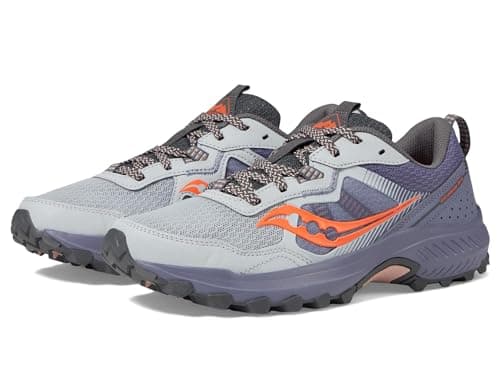

A damp October weekend in the Smokies will teach you a lot about your footwear. I was waiting on a friend who'd stopped to wring out her socks, again, somewhere past the Alum Cave trailhead when I started thinking seriously about what a solid, affordable trail shoe actually needs to do. She wasn't wearing anything wrong, just something that wasn't built for that specific misery. The Saucony Women's Excursion TR16 in Cloud/Iris came up in conversation that same night at camp, and I've been paying attention to it ever since.
We may earn from qualifying purchases.
The TR16 is a lightweight trail runner built around Saucony's VERSARUN midsole, 4.5mm lugs, a durable mesh upper, and a GORE-TEX waterproof shield. It's a practical package aimed squarely at day hikers and trail runners who don't want to spend a fortune and don't need a boot. If that sounds like a lot of your national park itinerary, keep reading. You can check current availability on Amazon here.
Best fit if…
You're the kind of traveler who logs five to ten miles on well-maintained trails, moves at a hiking pace but wants something lighter than a traditional boot, and absolutely cannot afford wet feet by mile three. That's really who this shoe was designed for.
The GORE-TEX shield is the headline feature for me. Honestly, most budget-friendly trail shoes skip waterproofing entirely or slap on a proprietary membrane that breathes about as well as a trash bag. GORE-TEX is the real thing, and it matters when you're crossing shallow creek drainage in the Cascades or dealing with morning dew on grass trails in Shenandoah. It's not magic, it won't save you from a misstep into a knee-deep puddle, but it handles splash and sustained light rain without complaint.
The 4.5mm lugs are enough for packed dirt, light mud, and gravel. If you're sticking to maintained national park trails rather than off-trail scrambles, they'll do the job. The VERSARUN cushioning is soft enough to make a long day feel manageable without being so squishy that you lose ground feel entirely.
I'd also say this shoe works well if you're planning a trip where you need one versatile shoe that can handle both the trail and a quick walk through a visitor center or camp store without looking completely unhinged. It's got enough structure to pass in casual settings. Check it out on Amazon if that multi-use case sounds like your trip.
What didn't click
The mesh upper. I understand why it's there, it keeps weight down and adds breathability, but "durable mesh" is doing a lot of marketing work here. In my experience, aggressive mesh uppers on trail shoes in this price range start to show wear after a season of regular use, especially around the toe box where brush and rock contact is highest. I'd want to see reinforced overlays in those zones, and from what's listed, it's not clear how substantial the protection actually is.
I'd also flag the lug depth. 4.5mm is a reasonable middle ground, but don't expect these to handle serious mud or loose volcanic rock the way a more aggressive trail shoe would. If your itinerary includes anything like the Wonderland Trail around Rainier in shoulder season, or slick sandstone in Zion after rain, you may wish you had something grippier underfoot.
And honestly, the price isn't listed via the product API, which means it fluctuates. I've seen Saucony trail shoes swing significantly on Amazon depending on the season and size availability. Check the current price before assuming it's a budget buy, because sizing out can push costs up unexpectedly.
On the trail / in use
The VERSARUN cushioning is genuinely one of the better things about this shoe. It's not aggressive foam. It's more of a steady, reliable absorption that makes a six-mile out-and-back feel less punishing on the knees and heels than a firmer midsole would. For day hiking, that's exactly what you want.
Fit runs fairly true to size from what I've gathered, though I'd always recommend sizing up a half if you're between sizes and planning on thick wool socks, which is basically every fall park trip I've ever taken. The Cloud/Iris colorway is subtle enough that it doesn't show trail dust too badly, which is a small thing that actually matters when you're at a trailhead at 6 AM and don't want to look like you rolled in from a mud run.
Traction held up well on packed surfaces. On wet roots, which are everywhere in the Appalachians and the Pacific Northwest, I'd still take it slow regardless of the shoe. No lug pattern fully fixes that problem. But on gravel, hard-pack, and light mud the grip is confident and the shoe doesn't feel squirrely underfoot.
The GORE-TEX membrane keeps moisture out well, though like any waterproof shoe, once water gets in over the collar, you're wet from the inside. That's not a flaw, that's physics. Plan your creek crossings accordingly.
If you're building a trip around a park with a lot of paved connector trails, interpretive paths, and moderate maintained trails, this shoe will cover most of what you need without weighing down your pack or your wallet. Grab your size on Amazon before it goes out of stock in the colorway you want, because that happens fast with Saucony's trail line.
I keep a running list of shoes I'd actually recommend to people planning multi-park road trips, and the TR16 earns a spot on that list for hikers who prioritize waterproofing and all-day comfort over aggressive terrain capability. It's not a crampon-ready mountaineering shoe and it doesn't pretend to be. For the kind of trails most national park visitors actually walk, it's a solid, practical choice. Do your logistics right, check the sizing, and get out there early before the parking lots fill up., Marcus
FAQs